Context Problem Process Research Design Solution Impact Reflections
Product Design B2B User Research Prototyping

UX Describe:
fixing the job description that was breaking both sides.

Junior UX designers couldn't get hired. Tech recruiters couldn't find good candidates. The job description was the missing link — too generic, too misaligned, and written by people who didn't fully understand the role.

14
Interviews (9 designers + 5 recruiters)
Hi-fi
Prototype delivered
Zeplin
Full handoff
B2B
Target: tech recruiters
Timeline
Feb – Sep 2022
My Role
UX Designer · Researcher · Prototyper
Tools
Figma · Miro · Notion · Maze · Zeplin
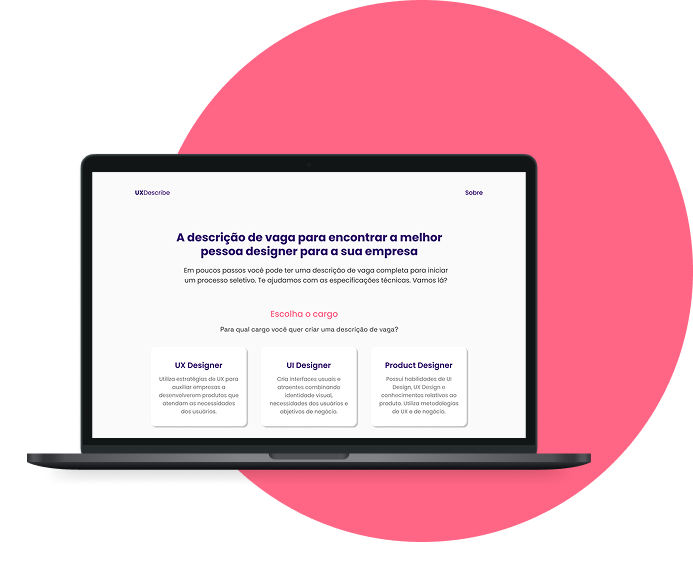
UX Describe final result
📋

Two frustrated groups.
One shared problem.

There are many job openings in UX/UI design. And yet, junior designers struggle to get hired and recruiters struggle to find good candidates. How is this possible?

Looking closer, the answer became clear: job descriptions written by tech recruiters without deep UX knowledge were creating a mismatch. Requirements were either overwhelming, inaccurate, or irrelevant to the actual seniority level being hired for.

This was the opportunity: design a tool that helps tech recruiters write better job descriptions — which would improve the experience for both sides of the hiring table.

Context
🤝
"How can we create compatibility — the Match — between companies and UX professionals, through better information?"

The challenge wasn't just a design problem — it was a communication and knowledge gap. Recruiters knew how to hire, but not what to look for in UX. Designers knew their craft, but couldn't bridge the gap when applying for roles that didn't accurately describe them.

Full design thinking,
from problem to handoff.

01
Discover
Desk research · 9 designer interviews · 5 recruiter interviews
02
Define
Affinity mapping · 2 personas · HMW statements · CSD matrix
03
Develop
Crazy 8's · 2×2 prioritisation · User flows · Wireframes
04
Deliver
Med-fi prototype · Usability testing · Hi-fi · Zeplin handoff

Listening to both sides
of the hiring table.

I conducted 14 interviews via Google Meet — 9 with junior UX designers and 5 with tech recruiters. After each set of sessions, I ran affinity mapping in Miro to group insights and identify patterns. This produced 6 core insights across both audiences.

UX Designers said...
Three frustrations from the candidate side
🚧 Overwhelming requirements for junior roles — long lists requiring years of experience for entry-level positions were everywhere.
📁 Difficulty building the first portfolio — no guidance on what to include or how to frame case studies for recruiters who don't know UX.
🤐 No post-interview feedback — candidates were left in the dark, unable to improve for the next application.
Tech Recruiters said...
Three frustrations from the hiring side
🔍 Difficulty finding qualified candidates — juniors were applying without reading requirements, making the filtering process exhausting.
📚 No formal UX training — most tech recruiters had learned about UX self-taught, making job description writing inconsistent and imprecise.
⚙️ Wanted to customise filters — recruiters wanted tools that helped them filter by specific skills, seniority, and role type.
Key insight from research
"The problem isn't that candidates are unqualified or that recruiters are unreasonable — the job description itself is the communication failure."

From insight to
design decisions.

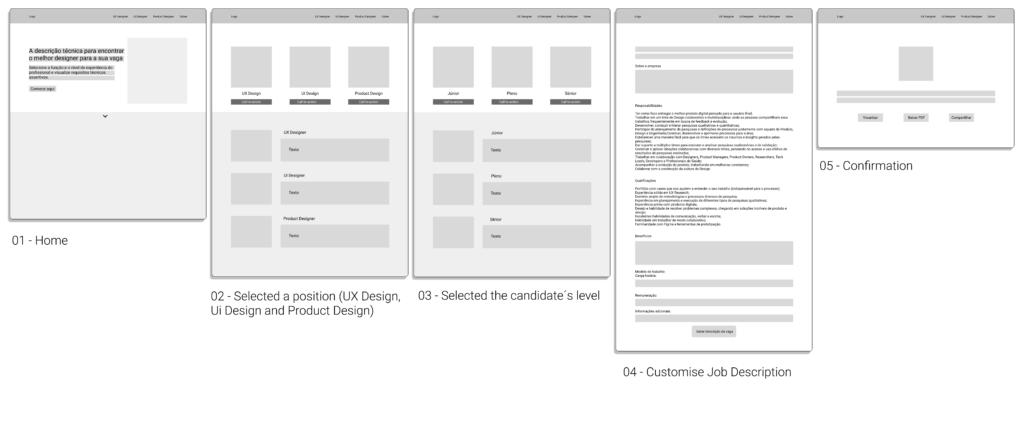
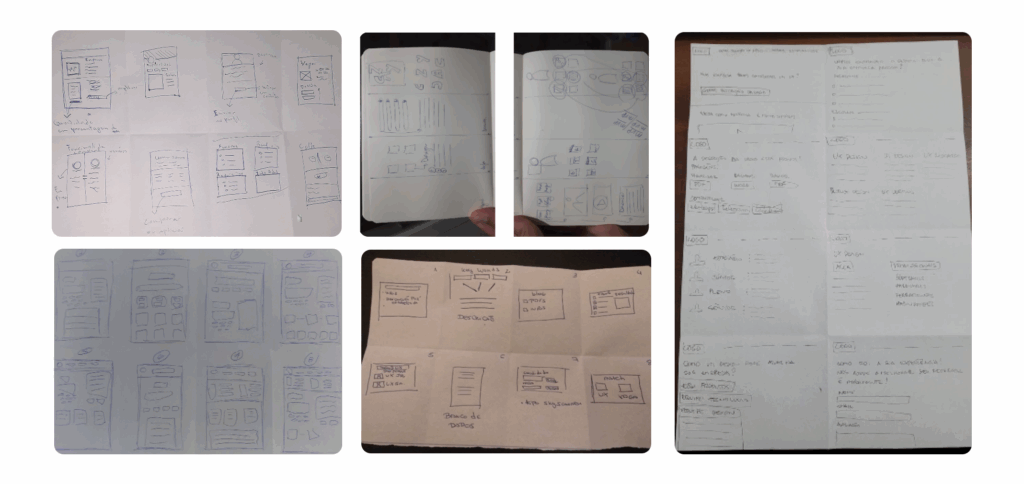
With 2 personas defined — a junior UX designer and a tech recruiter — I used Crazy 8's to generate 8 different solution concepts. Each team member did the same, then we used a 2×2 prioritisation matrix to converge on the most impactful options.

The solutions naturally gravitated toward the recruiter persona. The insight: fixing the job description at the source (the recruiter's side) would have a cascading positive effect on the candidate experience.

The chosen solution: a platform where recruiters generate tailored job descriptions by selecting role type and seniority level, with pre-populated technical requirements they can edit and customise.

Crazy 8s
💡
Wireframes
✏️

A platform that writes better job descriptions.
Every time.

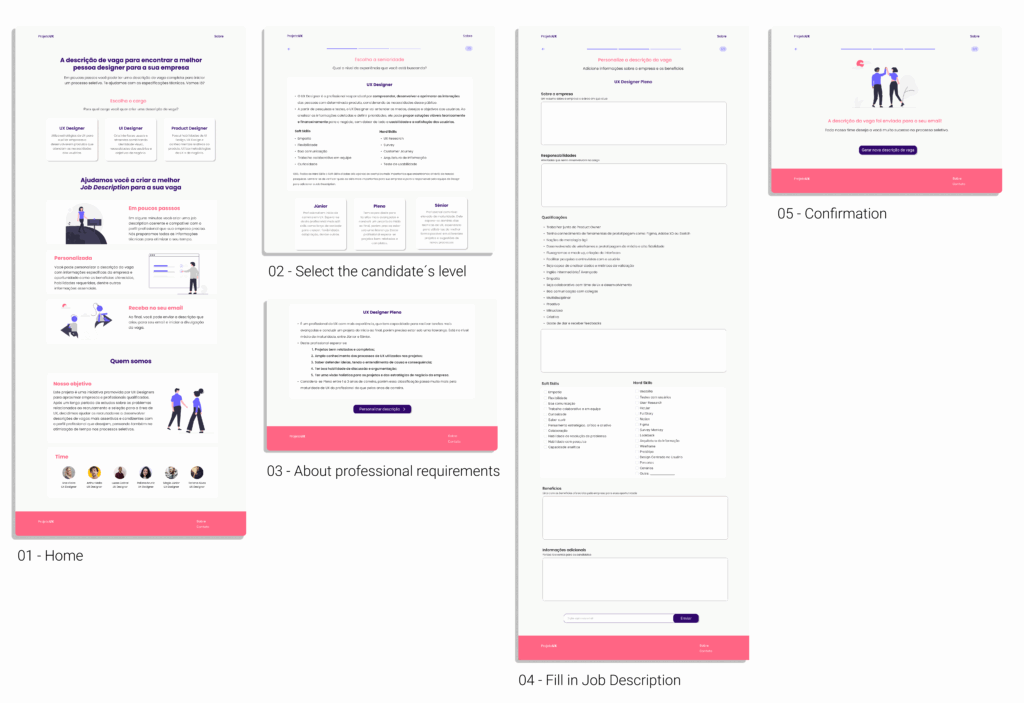
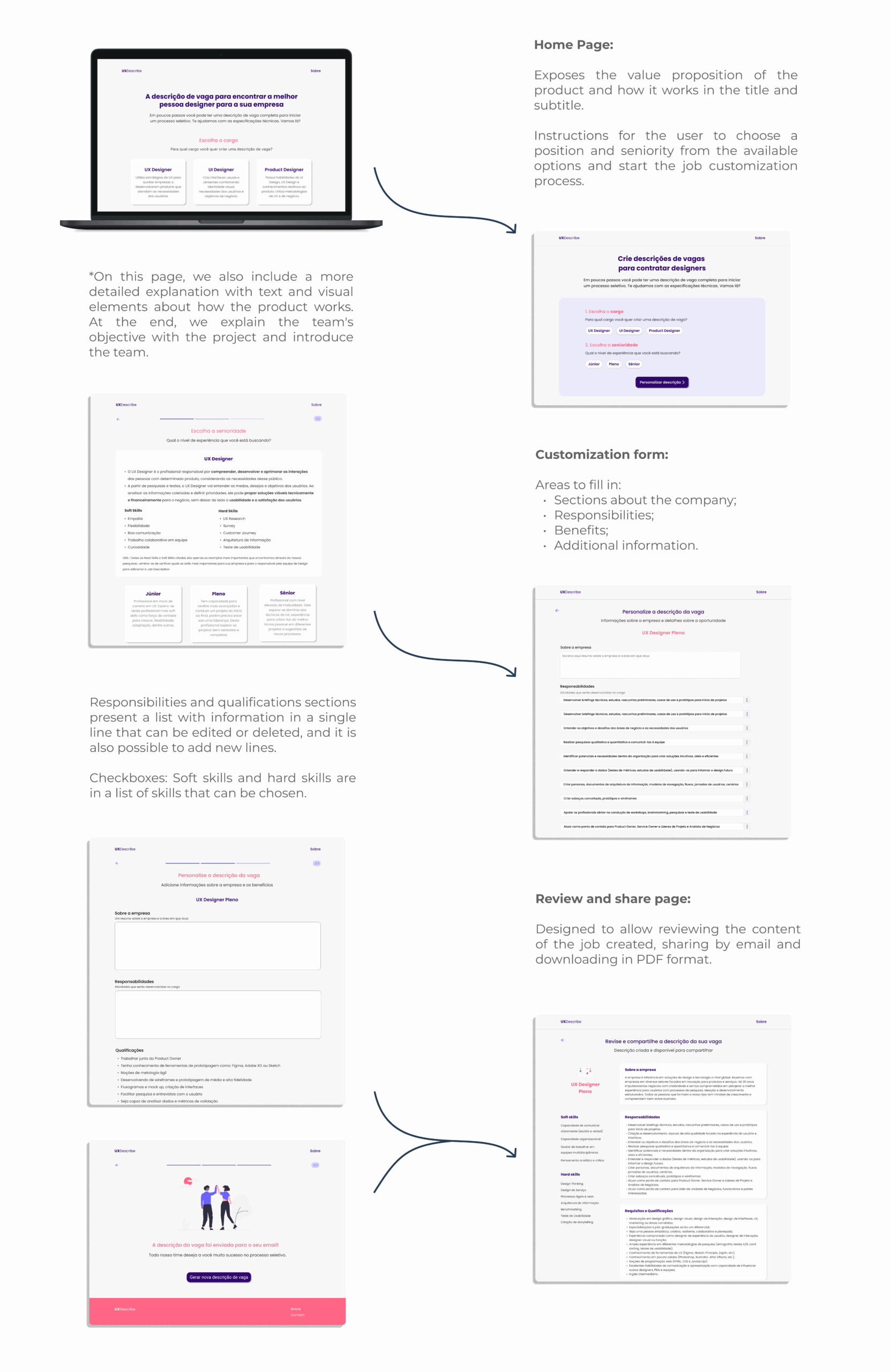
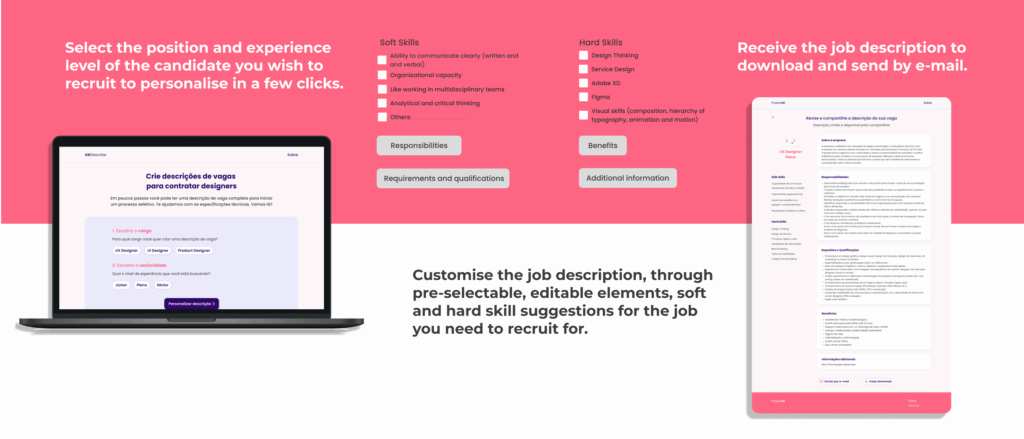
The recruiter opens the platform and selects a role type (UX Designer, UI Designer, Product Designer) and a seniority level (Junior, Mid, Senior). The platform generates a complete, editable job description pre-filled with accurate technical requirements, hard skills, and soft skills relevant to that profile.

Everything is customisable. When done, the description can be sent by email or downloaded — reducing a frustrating, inconsistent process to a few minutes.

Prototype
📱
Final prototype
Final result
🖥️

From concept to complete delivery.

The project went through the full design cycle — from raw research insights all the way to a tested, hi-fidelity prototype and developer handoff. A usability test on the mid-fi prototype led to targeted improvements before the final version was produced.

Zeplin
Complete developer handoff with annotated screens and user flows
Validated
Usability testing confirmed core flows and informed final improvements
View prototype in Figma ↗

What this project taught me.

01
Research questions need iteration. In early usability test sessions, I learned to adapt questions in real time. Adapting to the participant — not just following a script — produces far better data.
02
Moderated vs. unmoderated research are very different recruiting challenges. Unmoderated research is harder to recruit for — it requires more upfront trust-building from participants who can't see your face.
03
Teamwork amplifies everything — including disagreements. Working in a team on this project taught me how to share tasks, handle different perspectives, and use disagreement as a creative tool rather than a blocker.
04
The recruiter is a user too. Designing for a B2B tool meant understanding a non-traditional user — someone who uses the product as part of their job, not by choice. Their constraints and pressures shaped every design decision.
Back to the start

Road of Hope Foundation Website

A nonprofit helping refugees had a website getting in the way of its mission. I redesigned it end-to-end — from research to deployment.

See case study →
Road of Hope